Home / Answer Engine Optimization (AEO)
Answer Engine Optimization (AEO): What It Is and How It Differs From SEO and GEO
Updated August 25, 2026
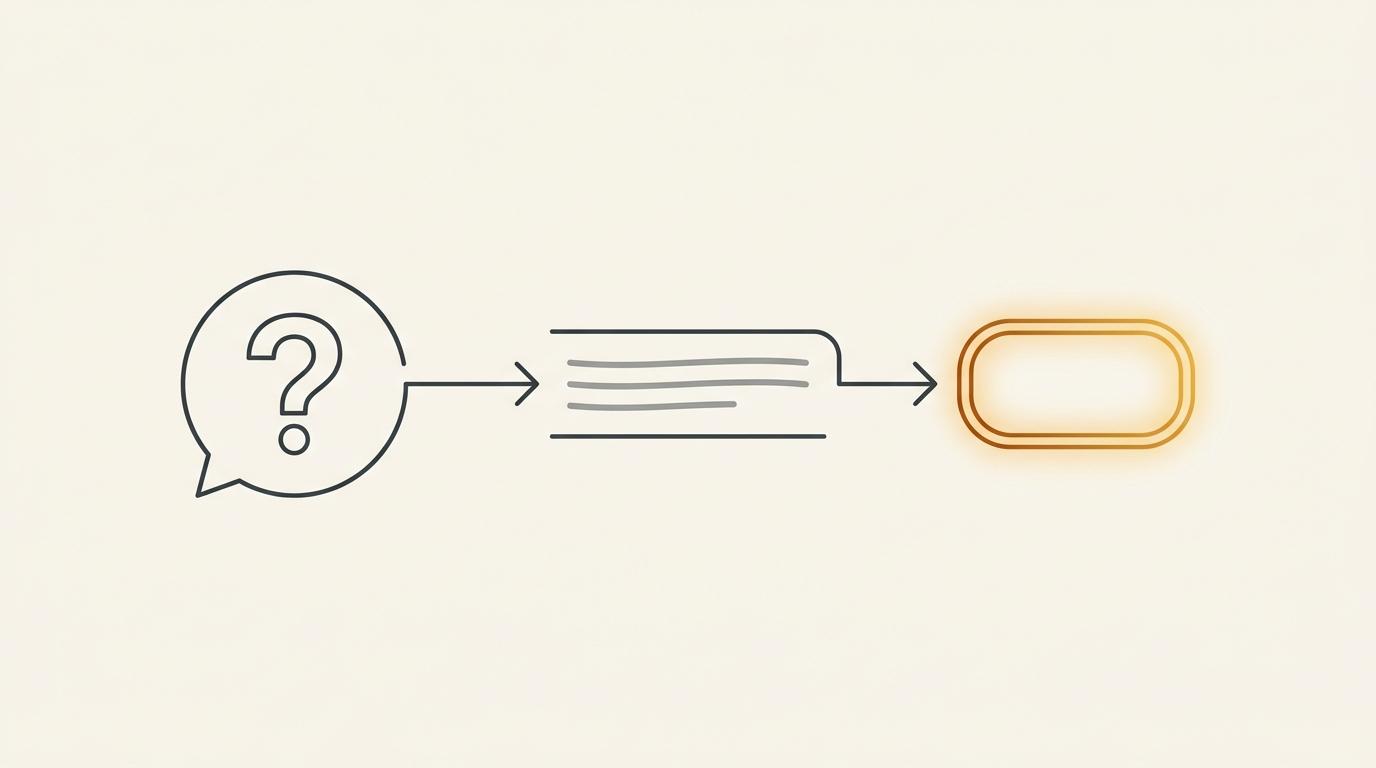
Someone asks an AI engine a direct question. The engine doesn't send them to a page. It answers, right there, in a sentence or two. Whichever page that answer came from just won, whether or not anyone ever clicks through to see it.
Key takeaways
- AEO structures content to get a specific question's answer extracted directly, the featured-snippet pattern.
- SEO targets rank position, GEO targets citation in any generative output, AEO targets one answered question.
- A 40-60 word direct answer stated plainly in the first sentence or two outperforms a technically correct answer buried later.
- AEO and GEO overlap enough in practice that the underlying structural work is nearly identical either way.
Answer Engine Optimization (AEO) is the practice of structuring content to directly answer a specific question so an AI engine or search feature can extract that answer and present it to the user, the way a featured snippet does. It focuses on question-and-answer shaped content specifically, where its broader sibling term GEO covers optimizing for generative AI engines more generally.
AEO, SEO, and GEO in one table
These three terms get used almost interchangeably, which causes more confusion than it saves time. Each actually optimizes for a different unit of success.
| Discipline | Optimizes for | Unit of success |
|---|---|---|
| SEO | Rank position in a list of links | A ranked page |
| AEO | A direct answer extracted for one specific question | One answered question |
| GEO | Citation inside any AI-generated response | Any generative engine output |
The full breakdown of each pairing, AEO against SEO and AEO against GEO specifically, gets its own dedicated guide rather than repeated here: see AEO vs SEO and AEO vs GEO.
The paragraph-answer structure AEO rewards
The pattern is consistent across featured snippets and AI-generated answers alike: state the direct answer plainly in the first sentence or two under a heading that closely matches the question, before adding context, caveats, or supporting detail.
The shape that gets extracted
H2 heading: phrased as or closely matching the actual question.
First 1-2 sentences: a complete, direct, 40-60 word answer, no throat-clearing.
Everything after: context, nuance, and supporting detail, for the reader who wants more than the extracted fragment.
This is why a page can be technically accurate and still lose the extraction: if the true answer only becomes clear on the third sentence, after a scene-setting paragraph, most extraction systems have already moved on to a competitor's cleaner structure.
Five things worth reading next
Each of these goes deeper on one part of AEO than this pillar covers at overview depth.
- AEO vs SEO: What's Actually Different - the full comparison, not just the summary table above.
- AEO vs GEO: How They Overlap and Where They Diverge - the specific cases where the distinction actually changes what you'd do differently.
- AEO Best Practices for 2026 - the tactical checklist version of the structure covered above.
- How to Measure AEO Success - what to actually track, since clicks alone miss most of the win.
- Common AEO Mistakes and Myths - where most AEO advice overreaches past what the evidence actually supports.
Scoring content against this structure
Whether a specific page actually has the direct-answer structure above, rather than just reading like it does, is easier to check with a real scoring pass than to eyeball. The same structural signals covered in the AI ranking factors pillar apply directly here.
Check the structure directly
The free AEO Content Optimizer scores pasted content 0-100 against this exact answer-first structure, no signup required.
Frequently asked questions
What is AEO?
Answer Engine Optimization is the practice of structuring content to directly answer a specific question so an AI engine or search feature can extract that answer and present it to the user, the way a featured snippet does. It's a question-focused subset of the broader GEO discipline rather than a separate one.
How is AEO different from SEO?
SEO optimizes for a ranked position in a list of links; the reader still has to click through and read the page. AEO optimizes for the answer itself getting extracted and shown directly, which can happen with or without the reader ever visiting the source page. The full comparison, including where the two disciplines still overlap, is covered in the dedicated AEO vs SEO guide.
Is AEO the same thing as GEO?
Close enough that the terms get used interchangeably in practice, but not identical. GEO is the umbrella term for optimizing any content for any generative AI engine. AEO narrows in specifically on the question-and-direct-answer shape, the featured-snippet pattern. Most AEO work is also GEO work; not all GEO work is specifically AEO-shaped.
What does AEO-optimized content actually look like?
A heading phrased as or closely matching the question, followed immediately by a direct, complete answer in the first sentence or two, before any additional context or caveats. The direct-answer-first structure matters more than length: a 40-60 word answer stated plainly outperforms a technically-correct answer buried three sentences into a paragraph.
Does AEO still matter if GEO covers the same ground?
Yes, because the terms serve different audiences even where the practice overlaps. A content team briefing a writer benefits from the narrower, more concrete instruction AEO gives ("answer this specific question directly") more than the broader GEO framing. Use whichever term the person you're talking to already uses; the underlying structural work is the same either way.