Home / AI Search Engines & Platforms
AI Search Engines & Platforms: How ChatGPT, Perplexity, and Google AI Overviews Cite Sources
Updated August 25, 2026
A page can rank #1 on Google for its target keyword and still never get mentioned when someone asks ChatGPT the same question. Both systems are working as designed. They're just built to do different jobs, and most businesses are only measuring one of them.
Key takeaways
- ChatGPT passed 1 billion weekly active users in July 2026; Perplexity processes roughly 780 million queries a month with a more citation-dense answer style.
- AI Overviews appeared in 43% of US searches as of mid-2026, up from 15% a year earlier, built on top of Google's existing index rather than a separate one.
- Citation and organic ranking are correlated but distinct outcomes: a page can rank #1 and still get skipped by an AI-generated answer.
- Citation accuracy varies by platform; a "cited" result is worth spot-checking, not assuming correct by default.
AI search engines and platforms answer a query by generating a synthesized response, drawing on a trained language model and, for most, a live web search pass, then citing some or all of the sources behind it. ChatGPT, Perplexity, and Google AI Overviews are the three most-used examples in 2026, joined by Microsoft Copilot and Google's Gemini app. A traditional search engine returns a list of links to click. An AI search engine returns an answer, with links (if any) attached as evidence rather than as the product itself.
Answer-as-product instead of links-as-product. That single shift is why generative engine optimization (GEO) exists as its own discipline, separate from ranking.
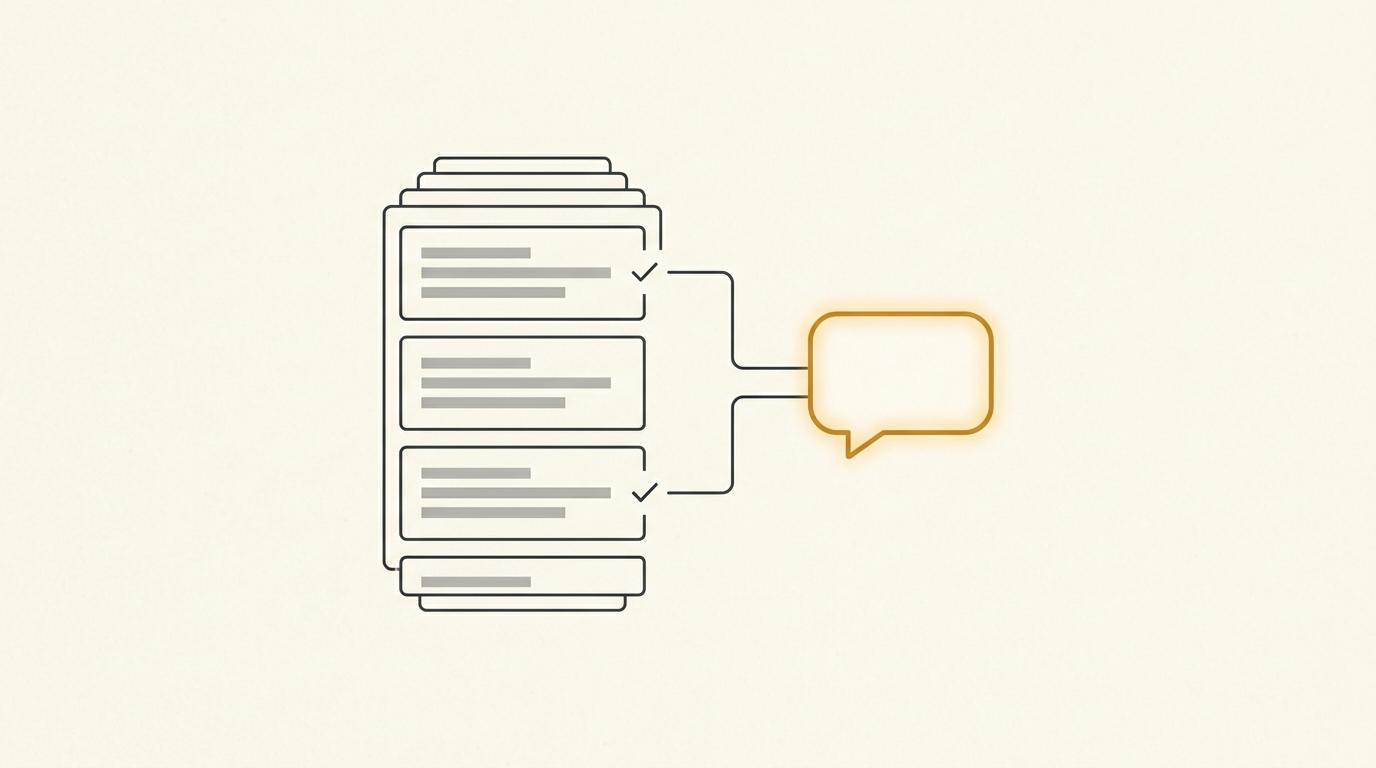
How AI search engines differ from traditional search
A traditional search engine like classic Google or Bing runs a query against an index, ranks the matching pages by relevance and authority signals, and returns a list of links. The user does the synthesis: opening a few results, comparing them, and forming an answer themselves.
An AI search engine skips that last step. It runs the query, often against a live web search pass rather than (or in addition to) the language model's trained knowledge, and generates a written answer directly. Some platforms attach citations, linking specific claims back to the pages that supported them. Some don't, or only do so inconsistently.
Traditional search
Query → ranked list of links → the user opens a few, compares, and decides.
AI search
Query → one synthesized answer → links (if any) attached as evidence, not the destination.
A restaurant critic's review works differently than a list of every restaurant in town: the list lets you browse, the review has already decided, and the restaurants it names by name get the visibility, whether or not they're actually the best option on the block.
This changes what "visibility" means. Organic ranking measures whether a page shows up in the list. Citation measures whether a page's content actually gets referenced inside an answer the user reads directly, which is a narrower and, for many query types, now a more consequential outcome.
It also changes what counts as evidence of visibility for a business. A rank-tracking report showing position #3 for a target keyword says nothing about whether that same page got cited the last time someone asked an AI engine the equivalent question. The two numbers can move in opposite directions, and a business relying only on organic rank tracking has no way to know that's happening until a client or prospect asks why a competitor showed up in ChatGPT and they didn't.
The major AI search platforms compared
Four platforms account for most AI-search citation volume as of 2026: ChatGPT, Perplexity, Google AI Overviews, and Microsoft Copilot (with Google's standalone Gemini app as a fifth, smaller-reach entrant). Each pulls sources differently, and the differences aren't cosmetic. They come from real architectural choices: whether the platform defaults to a live web search or a trained model's existing knowledge, whether it's layered on top of an existing search index or built from scratch, and how aggressively it surfaces citations versus folding sourced information into an unattributed answer.
Two smaller platforms are worth naming even though they don't yet move enough volume to warrant a row in the table below. Privacy-focused search tools like DuckDuckGo and Brave have added AI-generated summary features that cite sources more conservatively, appealing to a smaller but engaged segment of users who specifically avoid the larger platforms' data practices. Anthropic's Claude and xAI's Grok have also added web-search-backed answer modes, though independent citation-behavior research on both remains thinner than on ChatGPT and Perplexity as of this writing, which is itself worth noting rather than glossing over with a confident-sounding claim this pillar can't actually back up.
| Platform | Reach (2026) | Source basis | Citation style |
|---|---|---|---|
| ChatGPT | 1B+ weekly active users | Trained model + optional live web search | Fewer citations per answer, narrower source set |
| Perplexity | ~780M queries/mo | Live web search by default | Citation-dense, more sources cited per answer |
| Google AI Overviews | 43% of US searches (mid-2026) | Google's existing web index | Draws heavily from pages already ranking organically |
| Copilot | Bundled into Microsoft 365 | Bing index + trained model | Similar pattern to ChatGPT, smaller independent reach |
The practical difference: ChatGPT and Copilot lean on the trained model first and treat live search as a supplement, so a citation there rewards content that's clear and well-structured even without a strong organic ranking. Perplexity treats live search as the default mode, which is part of why it cites more sources per answer than ChatGPT does. Google AI Overviews is built on top of Google's own ranking signals, so a page's existing organic position still matters more there than on the other three.
This guide covers the category. The dedicated ChatGPT guide and Perplexity guide go deeper on the specific structural choices that move citation odds on each platform.
A reasonable starting question for any business is which platform to prioritize first. There isn't a universal answer, since it depends on where the target audience actually looks. A consumer product with broad appeal probably sees more real-world impact from ChatGPT and Google AI Overviews, given their sheer reach. A technical product, developer tool, or research-heavy niche often sees disproportionate traffic and citation value from Perplexity, since its user base skews toward exactly the kind of multi-source research query Perplexity is built around. The honest answer for most businesses past a certain size is both, tracked separately, since a citation on one platform says nothing about status on the other.
Which platforms actually cite your content
Citation volume and citation accuracy are two separate questions, and the 2026 research on both is more specific than most marketing copy about AI search suggests. On volume, Semrush's 2026 AI Visibility Index, built from over 126 million AI search prompts, found Perplexity citing nearly three times as many sources per response as ChatGPT's default web-search mode. That's consistent with Perplexity treating live search as its default behavior rather than a fallback.
On accuracy, a manual link-verification pass found Perplexity's cited URLs pointed to genuinely matching content more consistently than ChatGPT's did.
~3x
as many sources Perplexity cites per response, versus ChatGPT's default web-search mode
Separate academic research on generative search citations more broadly found that a meaningful share of cited sources across platforms didn't hold up under verification: a broken link, a mismatched claim, sometimes a citation that doesn't actually exist. Neither platform is citation-perfect. That's exactly why a monitoring tool that logs the actual response text and cited URLs per check, not just a cited-or-not flag, matters more than it might first appear.
None of this is a reason to distrust AI search generally. Treat "we got cited" the way a good analyst treats any single unverified data point: worth checking before repeating.
Why organic ranking and AI citation are different signals
The clearest evidence comes from a large-scale Ahrefs analysis of 863,000 keywords and 4 million AI Overview URLs, which tracked how often a cited page also ranked in Google's organic top 10. Eighteen months earlier, that overlap sat around 76%. By early 2026, it had fallen to somewhere between 17% and 38%, depending on the exact methodology. Ranking and citation used to move together. They don't anymore.
Share of AI-cited pages that also rank in Google's organic top 10
Source: Ahrefs, 863,000 keywords and 4 million AI Overview URLs analyzed. Range reflects differing methodologies across studies.
That gap is the whole reason generative engine optimization exists as a distinct discipline rather than a rebrand of conventional SEO. A page can do everything right by classic ranking standards: earn backlinks, hit target keywords, load fast, and still never get pulled into a generated answer. The engine is selecting sources by a different logic. How cleanly can it extract a specific, quotable answer, not how authoritative the domain looks in aggregate.
That logic rewards a particular shape of content. A page that states its core answer plainly near the top, defines its key terms instead of assuming familiarity, and organizes supporting detail under genuinely distinct headings gives an extraction system something clean to lift. A page that buries the answer under three paragraphs of scene-setting, however well it ranks, gives the system less to work with. A moving crew handles a labeled box differently than an unlabeled one. Same contents, faster decision either way.
A caveat worth being precise about: this is a structural pattern observed across citation research, not a documented rule any platform has published about its own ranking mechanics. The specific weighting inside each platform's system isn't public.
For a business, the practical takeaway isn't to abandon organic SEO. Google AI Overviews still draws heavily from pages already ranking well, so organic work keeps paying off there. It's that organic rank alone is no longer a reliable proxy for whether ChatGPT or Perplexity would cite the same page, which is why citation needs to be measured directly rather than inferred from a rank tracker.
Where the citation economy is still forming
Two trends are worth watching without overstating them. Community platforms, Reddit in particular, have become a noticeably larger source of AI-cited content through 2026 than they were even a year earlier, as engines increasingly pull firsthand user experience and discussion threads into answers about products, tools, and comparisons.
A thread the company never wrote can end up shaping how an AI engine describes it, for better or worse.
Separately, researchers examining generative search citations broadly have flagged a real quality concern: a meaningful share of cited sources across platforms don't hold up cleanly under manual verification, whether that means a link that doesn't support the specific claim attached to it or a citation that doesn't correspond to any real, checkable source. This is an active research area, not a settled statistic, and it reinforces the same point raised above: a citation is worth verifying, not just counting.
Five things that actually change whether you get cited
Each of the five areas below is covered in full depth in its own guide. Together they cover the platform-specific mechanics of getting cited, the growing set of engines beyond the big two, and how to actually compare coverage across all of them at once.
None of them substitute for the others. Optimizing for Google AI Overviews and optimizing for Perplexity are related but distinct exercises, because one leans on an existing organic ranking and the other doesn't, and a strategy built around only one platform will systematically undercount visibility on the rest.
- Google AI Overviews: How to Optimize and Get Cited - the highest-volume query in this category, since AI Overviews now sit on top of roughly half of all Google searches.
- How to Get Cited by ChatGPT - structural choices that matter for the platform with the largest total reach.
- How to Get Cited by Perplexity - what changes when the platform defaults to live search instead of a trained model first.
- Do Gemini, Claude, and Grok Rank Content Differently? - the smaller-reach platforms worth watching as they grow.
- AI Search Engines Compared: Coverage and Citation Behavior - a full side-by-side across every platform covered in this pillar.
Tracking this across multiple client domains
Everything above gets harder to act on once it's not one domain but several. An agency managing a handful of clients can check ChatGPT and Perplexity by hand for a while; an agency managing ten or fifteen can't sustain that without either burning hours every week or missing changes between checks. That's the specific gap covered in AI Visibility for Agencies, the companion pillar to this one focused on multi-client tracking, pricing an AI visibility service, and reporting results without a manual check every time a client asks.
The four platforms compared above don't stay still, either. A domain cited by ChatGPT this month isn't guaranteed to stay cited next month, since both the underlying content and the platform's own retrieval behavior can change. Tracking that reliably means checking on a schedule, not once, and logging what actually changed between checks rather than a single snapshot.
Try it on one domain now
For a single domain right now, the free AI Citation Checker runs a live check against ChatGPT or Perplexity for one domain and one prompt, no signup required, and returns the actual response text rather than a bare yes-or-no.
Frequently asked questions
Which AI search engines matter most?
ChatGPT and Google AI Overviews matter most by sheer reach: ChatGPT passed 1 billion weekly active users in July 2026, and AI Overviews appeared in 43% of US searches as of mid-2026, up from 15% a year earlier. Perplexity has a smaller audience (around 780 million monthly queries) but a citation-dense answer style that makes it disproportionately important for anyone tracking whether their content gets referenced. Copilot and Gemini matter most for specific audiences: Copilot for users already inside Microsoft 365, Gemini for users already inside Google's ecosystem.
How do I get cited by ChatGPT vs. Google AI Overviews?
The two platforms weight different signals. ChatGPT's web-search mode tends to favor pages with clear, extractable answers near the top of the content and cites a narrower set of sources per response. Google AI Overviews draws more heavily from pages that already rank well organically, since it's built on top of Google's existing index and ranking signals. In practice this means a page optimized for AI Overviews should also hold a reasonable organic ranking, while a page optimized for ChatGPT citation can succeed on structure and clarity alone, independent of its Google ranking. The dedicated guides on getting cited by each platform, linked below, go deeper on both.
Do AI search engines replace traditional search?
Not yet, and not entirely. Google remains the default entry point for the large majority of searches, and AI Overviews sit on top of Google results rather than replacing them for most query types, particularly transactional and local searches. What's changed is that a meaningful share of informational queries, especially research-style and comparison questions, now get answered inside an AI-generated response before the user ever reaches a list of blue links, which is why citation inside that response has become a separate, measurable outcome from organic ranking.
Can a page rank #1 on Google and still never get cited by an AI engine?
Yes, and it's one of the more counterintuitive findings in recent citation research. An Ahrefs analysis of 863,000 keywords and 4 million AI Overview URLs found the overlap between cited pages and top-10 organic rankings fell from around 76% eighteen months earlier to somewhere between 17% and 38% by early 2026. A page can be the definitive organic answer and still get skipped when an engine writes its own synthesized response, because the two systems are selecting and weighting sources differently, not running the same algorithm twice.
Are AI-cited sources always accurate?
No, and citation accuracy varies meaningfully by platform. Manual verification studies in 2026 found Perplexity's cited links pointed to real, matching content more often than ChatGPT's did, while both platforms occasionally cite a source that doesn't actually support the claim attached to it, or fabricate a citation entirely. This is worth knowing both as a searcher (verify a surprising claim before repeating it) and as a business being monitored for citations (a "cited" result should be spot-checked, not assumed accurate by default).